


Donald Trumpreturned to the presidency with a bang, rushing through his MAGA wish list in a shock-and-awe first year back that has ignitedgrowing resistanceand tested his iron grip on the GOP.
Administration officials and allies say they still have big plans for year two, and 2026 began with attention-grabbing moves after U.S. troopscaptured Venezuela's presidentand Trump issued populist decrees onhousingandcredit card rates.
"There's no limitation to his desire to drive news cycles," said Marc Short, Trump's legislative director during his first term and later Vice PresidentMike Pence's chief of staff.
More:Made-for-TV presidency: How Trump's celebrity past shaped his first 100 days
 Protests across the nation Saturday decried a fatal shooting by an Immigration and Customs Enforcement (ICE) agent and Trump's military actions in Venezuela. See the nationwide protests, beginning here in New York City near the Jacob K. Javits Federal Building in Manhattan during an Ice Out for Good protest in Manhattan Jan. 10, 2026. The Javits Federal Building is where ICE officers have arrested immigrants attending mandatory check-ins." style="max-width:100%; height:auto; border-radius:6px; margin:10px 0;" loading="lazy" />

 Protesters gather in steady rain outside the Henderson County Courthouse in Hendersonville, North Carolina on Jan. 10, 2026." style="max-width:100%; height:auto; border-radius:6px; margin:10px 0;" loading="lazy" />


 Organizers hang up a photo of Renee Good, who was killed by an ICE agent in Minneapolis on Jan. 7, during a protest against ICE activity at Evelyn K. Davis Park on Saturday, Jan. 10, 2026 in Des Moines, Iowa." style="max-width:100%; height:auto; border-radius:6px; margin:10px 0;" loading="lazy" />

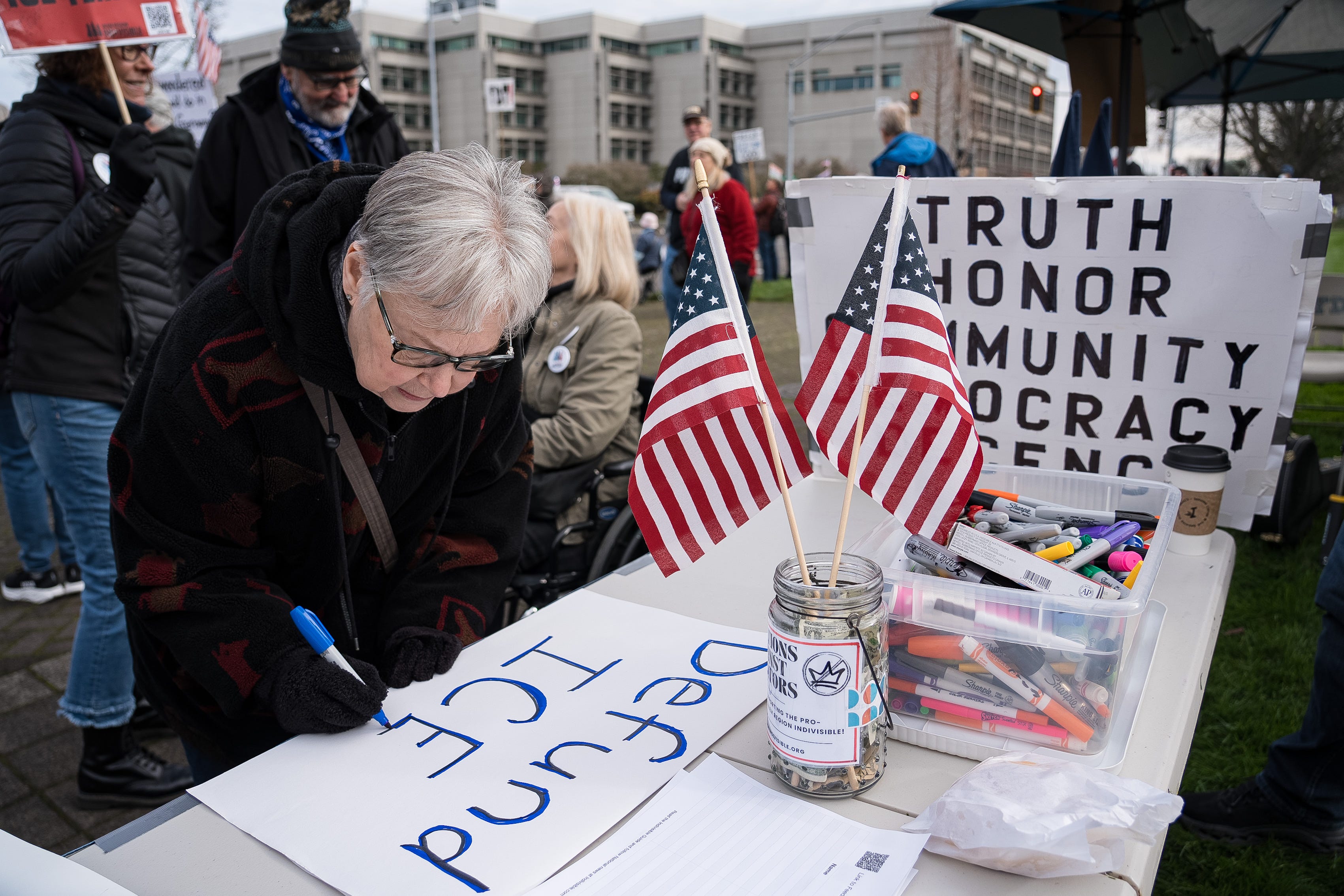

 A anti-ICE protester shout at ICE agents as they exit the Bishop Henry Whipple Federal Building parking lot during demonstrations sparked by the fatal shooting of a Renee Good by an ICE officer in Minneapolis on Jan. 10, 2026." style="max-width:100%; height:auto; border-radius:6px; margin:10px 0;" loading="lazy" />


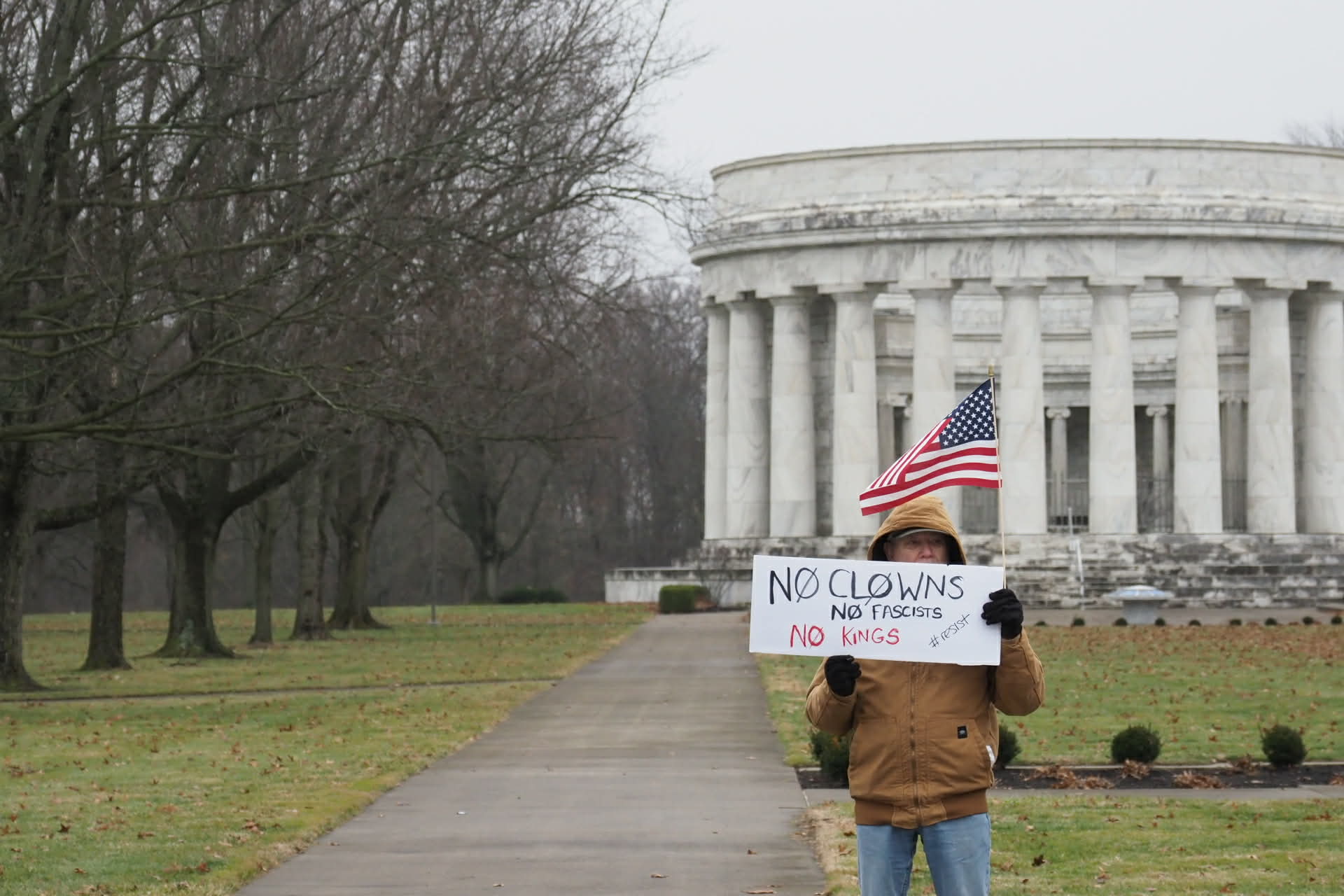


 A dozen people turned out on the pedestrian walkway over the Indiana 45/46 Bypass to protest the fatal shooting of Minneapolis resident Renee Good in Bloomington, Ind., Jan. 10, 2026." style="max-width:100%; height:auto; border-radius:6px; margin:10px 0;" loading="lazy" />


 Protestors hold signs during a protest against ICE and the Trump administration's actions in Venezuela on Saturday at Savannah City Hall in Savannah, Ga." style="max-width:100%; height:auto; border-radius:6px; margin:10px 0;" loading="lazy" />
  Debra Hyman, left, and Marie Gianelli participate in the IEC Out For Good protest in front of Delta College at Pacific and Yokuts avenues in Stockton, Calif., Jan. 10, 2026. " style="max-width:100%; height:auto; border-radius:6px; margin:10px 0;" loading="lazy" />
  Protesters gather in Dover, New Hampshire, Jan. 10, 2026 for one of many protests held nationally after the fatal shooting of Renee Nicole Good by an ICE agent in Minnesota." style="max-width:100%; height:auto; border-radius:6px; margin:10px 0;" loading="lazy" />
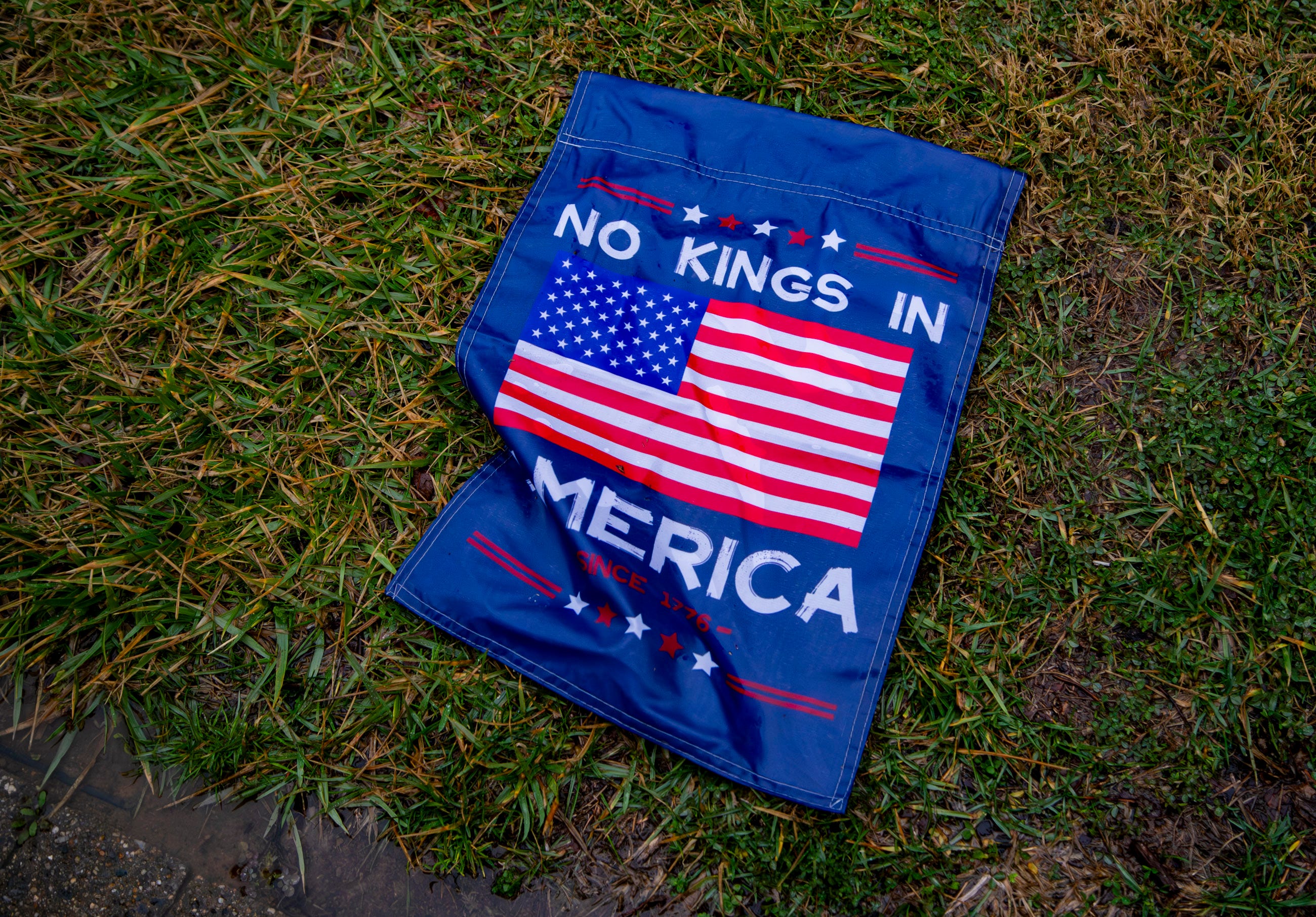 A sign reading "No Kings in America" rests on rain-soaked grass during a protest outside the Henderson County Courthouse in Hendersonville, North Carolina on Jan. 10, 2026." style="max-width:100%; height:auto; border-radius:6px; margin:10px 0;" loading="lazy" />


 Tessa Petit, executive director of the Florida Immigration Coalition, calls on protesters to continue to oppose immigration enforcement in the U.S. in suburban Boca Raton, Fla., Jan. 10,. 2026." style="max-width:100%; height:auto; border-radius:6px; margin:10px 0;" loading="lazy" />
  A dozen people turned out on the pedestrian walkway over the Indiana 45/46 Bypass to protest the fatal shooting of Minneapolis resident Renee Good in Bloomington, Ind., Jan. 10, 2026." style="max-width:100%; height:auto; border-radius:6px; margin:10px 0;" loading="lazy" />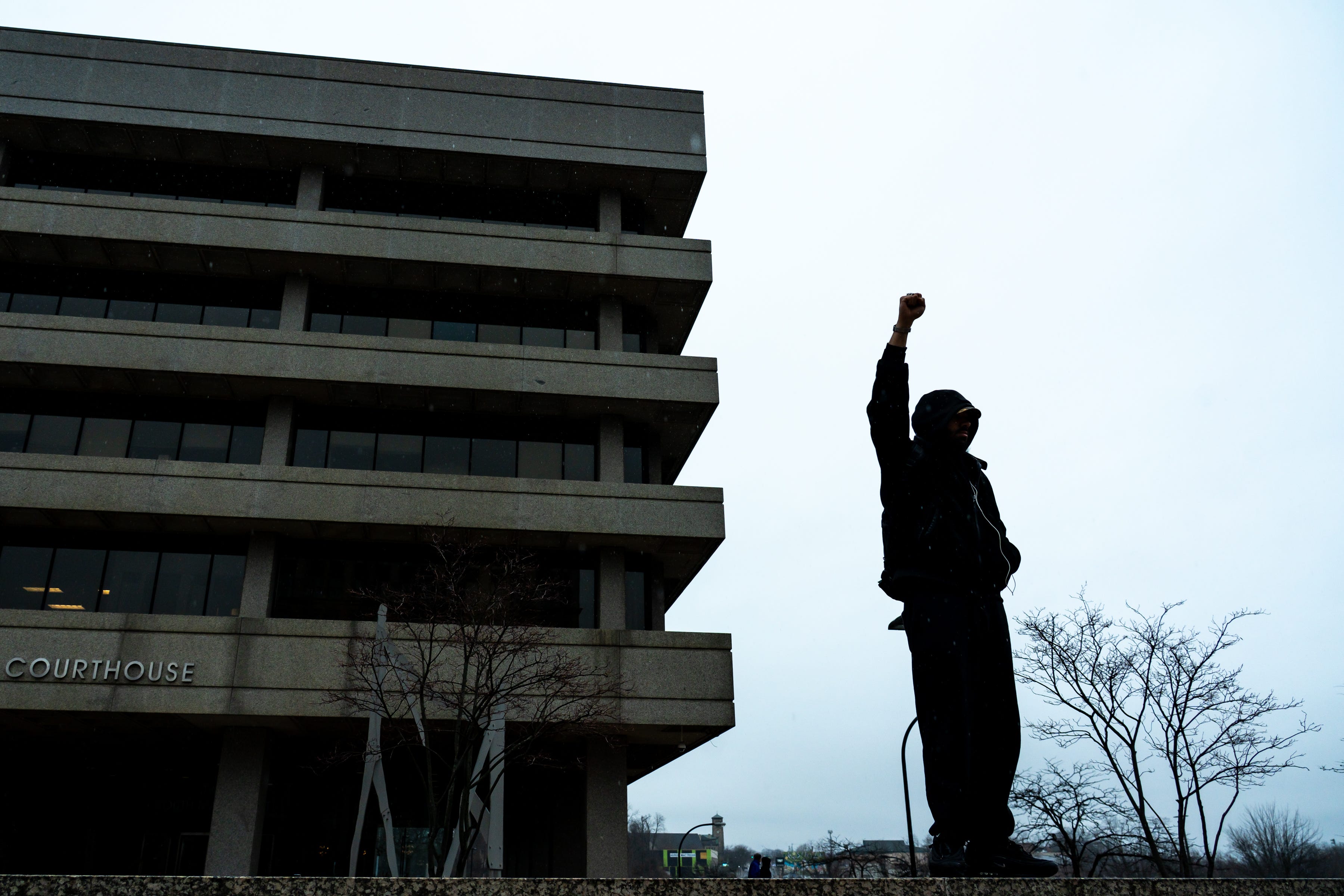
See the scene: ICE shootings, Venezuela strike spark national protests
Protests across the nationSaturday decried a fatal shooting by an Immigration and Customs Enforcement (ICE) agent and Trump's military actions in Venezuela. See the nationwide protests, beginning here in New York City near the Jacob K. Javits Federal Building in Manhattan during an Ice Out for Good protest in Manhattan Jan. 10, 2026. The Javits Federal Building is where ICE officers have arrested immigrants attending mandatory check-ins.
But even Republicans say Trump's prospects for more major changes this year are uncertain as the looming midterm election narrows what's politically possible for the 79-year-old president,Congress looks increasingly deadlocked, public opposition to his aggressive moves at home and abroad mounts, and the central issue for many Americans – cost-of-living concerns – defies easy solutions.
Since hisswearing-in on Jan. 20 last year, Trump has shaken the American political system by pushing thelimits of executive power, bulldozing Congress in a blitz of mass deportations, dramaticshakeups at federal agencies, National Guarddeploymentsin the streets of major cities andmilitary campaigns abroad.
Though the president's first-year moves delighted his MAGA base, they often were controversial. Trump'saggressive use of the militaryand federal law enforcement, along with other actions such asprosecutions of his perceived political enemies, have many Democratscalling him an authoritarian− and vowing strong opposition.
More:Inside Trump's second inauguration: Scenes from an unusual, historic, very MAGA day
Some allies predict the Trump administration will push policies with broad appeal in his second year as GOP lawmakers face tough reelection fights. They already are campaigning around an argument that Democratic majorities in Washington would usher in aggressive oversight of Trump andthe possibility of impeachment.
Rep. Greg Steube, R-Florida, said he expects the White House to pursue an agenda that helps Republicans in "tough swing districts." Trump's proposals to cap credit card interest rates and ban institutional investors from buying homes could appeal to Democratic and independent voters, too. A White House official pointed to a discussion the president had with progressive Massachusetts Sen. Elizabeth Warren recently about credit card rates as an example of Trump's unconventional approach.

Driving down the cost of living tops the 2026 priority list, according to two White House officials, and the administration is eyeing everything from lowering drug prices to tackling housing and other health care costs.
Beyond affordability, one official also pointed to potential cryptocurrency and crime legislation passing this year.There's even talk ofanother megabilllike the one Trump signed into law last year packed with his priorities, namely tax cuts. And Trump has seized oninvestigations into fraudin federal programs in Minnesota to promise anationwide anti-fraud campaignwhile alsothreatening to cut off federal moneyto "sanctuary" cities and states that defy federal immigration enforcement efforts.
Yet the president has struggled to stay on message. He promised progress on affordability in a speech Jan. 13 while also dismissing it as "a fake word by Democrats." And his administrationoften has distractedfrom kitchen table issues with provocative moves, including the military action in Venezuela at the start of the year,doubling downon immigration enforcement efforts after an immigration agent killed a woman in Minneapolis, and launching a criminal investigation into Federal Reserve ChairJerome Powell.
More:How Trump's 'Donroe Doctine' could backfire in midterm fight on economy
Trump is kicking off the year with59% of Americans disapprovingof his job performance ina CBS News/YouGov surveyreleased Jan. 7. More independent voters now lean toward Democrats,according to a Gallup survey, than Republicans, who held an edge with independents in 2024 but lost it to Democrats in 2025.
Meanwhile, the already narrow Republican majority in the House is shrinking withthe departure of one lawmaker and death of another, leaving a 218-213 GOP advantage that makes it extremely difficult to pass legislation that isn't bipartisan.
Election year

Trump touted his first year back in a speech to theDetroit Economic Clubon Jan. 13, saying "I've kept all my promises and much more." He painted a rosy picture of the economy while promoting his sweeping tariff program and passage of his signature tax cut legislation, among other moves. A White House official said Trump will be taking many more trips before the midterm election to sell his economic message and roll out new policies.
There has been backlash to many of Trump's big first-year actions, though, with polls showing most votersoppose his tariffsand disapprove of hishandling of immigrationenforcement. And there is simmering discontent with Trump's economy, especially when it comes to consumer prices.
Trump has acknowledged that the midterm election could be difficult, noting ina speech to GOP lawmakersearlier in January that the party that holds the presidency typically loses seats in Congress. Among the past five presidents, four of them lost the House majority in their second year in office − including Trump in 2018.

"I wish you could explain to me what the hell's going on with the mind of the public because ... we have the right policy," Trump said Jan. 6.
Democrats highlighted affordability concerns ina series of strong election performanceslast year across the country, including overperforming in GOP-leaning seats in red states such as Iowa, Florida and Tennessee. Trump ran on bringing down costs, but the issue was overshadowed by other priorities last year andworsened by the president's tariffs, some of which he hasdelayedorlifted for certain consumer productsin recent weeks.
Sen. Rick Scott, a Florida Republican closely aligned with Trump, said people are concerned about the "cost of everything," and he expects a big push on affordability. "I think a lot of it's going to be done out of the White House because here almost nothing can get passed," he said.
Trump's go-it-alone strategy
The president opened 2026 with a pair of social media posts that grabbed attention, declaring he wouldpush to ban institutional investorsfrom buying single-family homes andcap credit card interest rates at 10% for a year.
"AFFORDABILITY!" Trump declared in the credit card announcement, even as some Republicans said it was unfeasible.
It's a word that will be repeated endlessly this year. Whether Trump can make progress on it will be a huge factor in the midterms. Some Trump allies have reservations.Stephen Moore, an economic adviser for Trump's 2016 campaign, said capping credit card rates goes against free market economics and could make it harder for poorer people to get credit.
"As a free market economist, one of the first rules of economics is that government wage and price controls are almost always a bad idea," said Moore, adding the best way to address affordability is to grow the economy. Moore pointed to GDP growth and Trump's tax cuts in praising his economic agenda.
Republican House Speaker Mike Johnson alsoquestioned the credit card proposal, saying there could be a "negative secondary effect."

"I wouldn't get too spun up about ideas that are out of the box,"the Louisiana Republican said Jan. 13.
Short described Trump's proposals as "pure socialist economics" in line with progressives such as Vermont independent Sen. Bernie Sanders and Warren, the Massachusetts Democrat.
An alignment between Trump and progressives to pass populist policies that appeal to both the left and right would be a remarkable development for the former reality TV star, who for years voted as a Democrat before winning the White House in 2016 as a Republican.
Short said he doubts any bipartisan consensus comes to fruition, though, saying Democrats won't want to give Trump legislative wins.
Trump's efforts to publicly pressure industries and individuals, from "the intimidation of Powell ... to lower (interest) rates" to calling out credit card companies and pressuring oil companies to invest in Venezuela indicates the president will continue to flex whatever power he can, Short said. Much of Trump's 2025 agenda came through executive orders, and 2026 could be the same.
Must-pass legislation

Trump and lawmakers face the prospect of another government shutdown as a Jan. 30 deadline looms for several must-pass bills to fund federal agencies. To make that happen, the president and Republicans will again need some measure of bipartisan support, especially in the Senate.
What's possible beyond that is uncertain. Lawmakers also are debating health care legislation as insurance premiums rise after Affordable Care Act subsidies expired. Trump recently rolled out his health care plan, and a White House official said the president also will release a housing plan soon, with no letup in his frenetic pace.
Another administration official who spoke with USA TODAY rejected the idea that the administration has major unfinished business. Trump and Republican leaders included many of their priorities in legislation the president signed July 4 that cut taxes and spending, including on health care. Republicans believe that when Americans start to see the impact of the tax measures this year it will alleviate some of the affordability concerns.
Trump is finding it increasingly difficult to corral Republicans who are starting to look ahead to their own reelection fights. A pair of bills that Trump opposed to extend the ACA tax credits and stop him from further military action in Venezuela attracted notable GOP support this year, and Republicans have strongly criticized the criminal investigation of Powell, the Federal Reserve chair.
As lawmakers contemplate what will play in the midterms, so is the Trump administration. A White House official said immigration legislation is unlikely because the issue is so politically charged.
Though Trump lately has shown an interest in issues with bipartisan appeal, his aggressive instincts could quickly overshadow the administration's message.
The U.S. entanglement in Venezuela is now a major question for the foreseeable future. Trump is threatening further military action in Iran amid anti-regime demonstrations. He also has increasingly talked about taking control of Greenland, an idea resisted by longtime U.S. allies and many Republicans.One GOP House member saysthe president's persistence in year two could even lead to him voting for Trump's impeachment.
Contributing: Francesca Chambers
This article originally appeared on USA TODAY:What's left on Trump's MAGA wish list? What year 2 looks like.


